Net Metering Programs in Washington
Net metering programs allow homeowners to offset electricity bills by sending excess solar energy back to the grid. For residents of Washington State, these initiatives can make rooftop solar arrays more affordable, especially under Seattle City Light and Puget Sound Energy (PSE). In this article, we’ll explain how net metering programs work, outline the steps to enroll, and offer real-life examples of monthly bills. We’ll also cover upcoming legislative changes and highlight potential financial benefits for homeowners installing solar in 2025–2026. By understanding the ins and outs of net metering programs, you’ll be well on your way to reducing your utility costs and maximizing your clean energy investment.
Why Net Metering Matters in Washington State
Washington’s mild climate may not seem like an ideal spot for solar, yet rooftop installations have surged in recent years due to falling panel prices and supportive policies. Despite frequent clouds, the state’s net metering programs help homeowners make the most of available sunshine. According to the Washington State Department of Commerce, Washington has seen a 38% increase in residential solar capacity since 2019. Utility companies credit net metering with fueling much of this growth by letting solar-equipped homes receive bill credits for power exported to the grid.
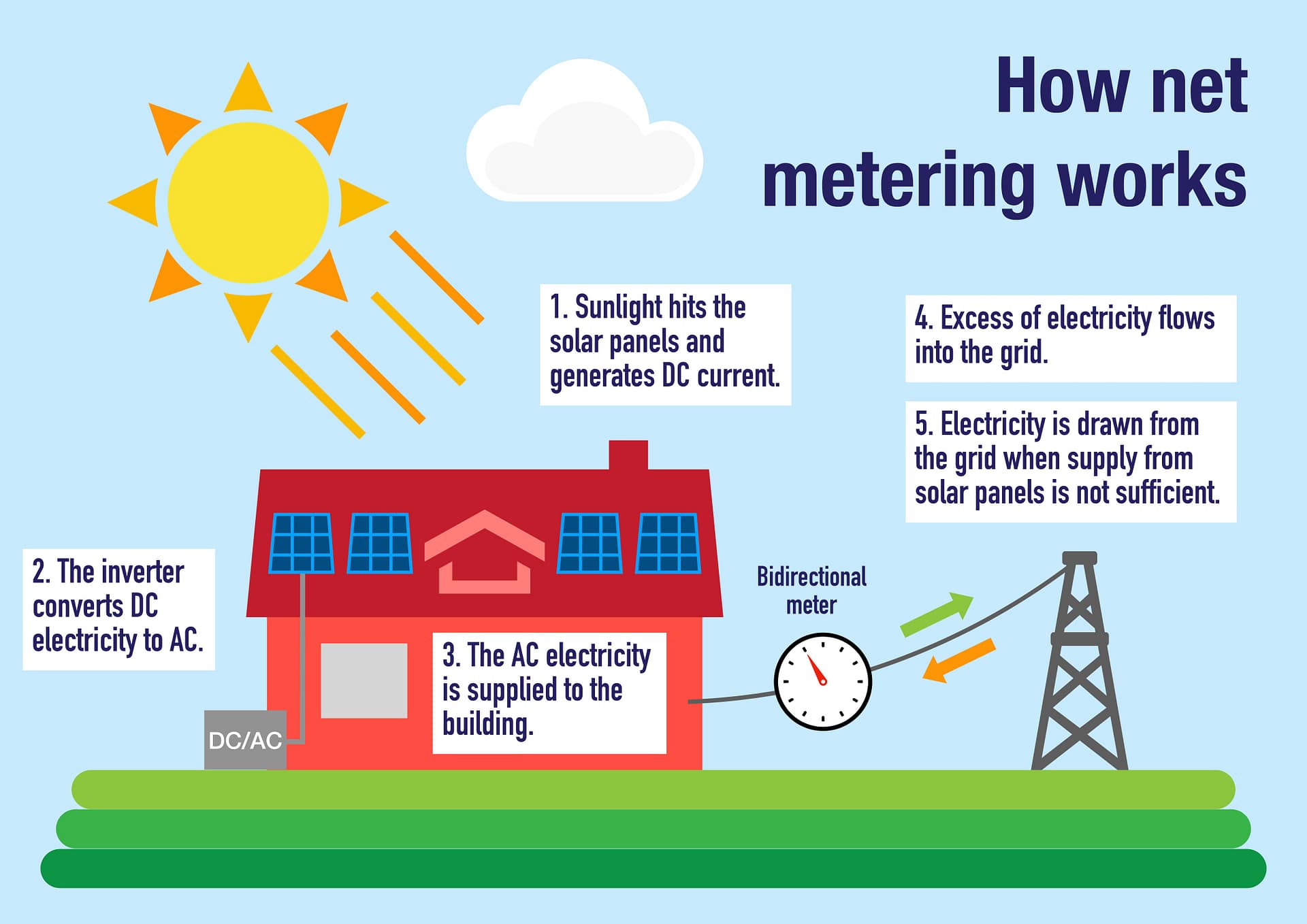
Under net metering, your electric meter essentially “runs backward” when your solar system produces more electricity than you consume. You accumulate credits, which you can use to offset future consumption, typically at full retail electricity rates. This arrangement significantly boosts solar’s financial viability. As a result, you rely less on the grid and shield yourself from rising utility prices. Whether you’re in an urban district of Seattle or a suburban corner of Pierce County, net metering programs ensure your solar panels hold greater long-term value.
Key Components of Net Metering Programs
Although specifics can vary by utility, net metering programs share fundamental principles. Below are the core elements you’ll encounter when signing up for net metering in Washington:
1. Bi-Directional Meter
When you participate in net metering, your utility typically installs a bi-directional meter—or reprograms your existing smart meter—to track both the electricity you use from the grid and the surplus you export. If, for example, your panels generate 25 kilowatt-hours (kWh) in a day while your home uses only 18 kWh, the remaining 7 kWh flows onto the grid. The meter notes the outflow and applies credits to your account.
2. Monthly Netting
Most net metering programs settle up monthly, subtracting the kWh you’ve fed into the grid from the kWh you’ve consumed. If you’ve generated more than you’ve used, you may see a credit line on your statement. If you require more than you’ve produced, you pay the difference at standard retail rates. In Washington, credits might carry over for up to a year, though specifics vary by utility.
3. Annual True-Up
In many cases, net metering programs feature an annual true-up date—often in the spring. On that date, any unused net metering credits may expire or be zeroed out. If you rarely use all your excess credits, you might want to size your system to meet or slightly exceed your home’s consumption but not produce vastly more. Too large a system can lead to wasted credits if your utility does not compensate them in cash. Some EPA guidelines and local energy policy statements note that moderate oversizing can still benefit you, especially if you expect your household’s consumption to grow (for instance, by adding an electric vehicle).
Seattle City Light’s Net Metering Program
Seattle City Light (SCL) stands out as one of the oldest municipally owned utilities in the U.S., serving Seattle proper. The city’s robust environmental goals align with a strong net metering program. Here’s how to enroll and make it work for your home.
Enrollment Process
- Obtain a Permit: Before installation, confirm your rooftop can support solar panels. You must secure electrical and building permits from the Seattle Department of Construction & Inspections.
- Install Your System: Hire a licensed solar contractor. After final inspections, the contractor typically guides you through net metering paperwork.
- Submit an Interconnection Application: Download the net metering application from the Seattle City Light website. Provide system details such as size, inverter type, and relevant safety features.
- Wait for Meter Swap: Once approved, SCL either configures your existing smart meter or installs a bi-directional meter. This device tracks inflows and outflows in kWh.
- Start Earning Credits: When your system goes live, you’ll see a “net” reading on subsequent bills. Each statement highlights your net usage (or surplus) for that billing cycle.
Credit Calculation
SCL credits surplus production at the full retail rate for residential customers. If your panels produce 200 kWh in a month but your home only needs 150 kWh, the extra 50 kWh offset future consumption. The utility carries these credits forward until your annual anniversary date, at which point any unused credits revert to Seattle City Light with no direct payment to you. Therefore, aim to size your solar array close to your annual usage if you want to avoid forfeiting excess credits.
Puget Sound Energy’s Net Metering Program
Puget Sound Energy (PSE) operates as the largest utility in Washington, covering a broad swath of King County, as well as other counties. Their net metering rules mirror the overarching guidelines mandated by Washington State law, but certain specifics can differ from SCL’s approach.
Enrollment Steps
- Project Review: Decide on your solar system’s size based on your home’s typical annual consumption. Overly large arrays might create unutilized credits.
- System Installation: Use a certified solar installer. They handle mechanical designs and ensure compliance with local building codes, typically referencing data from NREL or other resource guides.
- Interconnection Application: Download PSE’s net metering documents from the PSE website. Fill out technical specs (capacity, inverter details) and attach single-line diagrams.
- Meter Configuration: PSE might reprogram your existing meter or install a dedicated net meter.
- Approval and Activation: Once your final inspection passes, you can switch on your solar array. Credits appear on future bills.
Billing Mechanics
PSE also nets usage monthly. Surplus kWh offset future usage at the same retail rate you pay for normal consumption. If you’re a small-scale generator with up to 100 kW capacity (typical for a large residence or small farm), you qualify under these net metering rules. Similar to SCL, leftover credits often expire after a 12-month cycle (commonly in April). No direct payment for unclaimed credits occurs, so designing your system near your annual load helps optimize cost savings.
Upcoming Legislative Changes and Deadlines
Washington State’s net metering regulations have remained stable in recent years, yet a few potential changes loom on the horizon. If you’re contemplating a 2025–2026 installation, keep an eye on legislative developments that might modify net metering programs or utility compensation rates.
State-Level Policy Updates
A proposal within the Washington State Legislature aims to extend or possibly expand net metering caps. Under current law, utilities are obliged to provide net metering until cumulative solar capacity reaches a certain threshold (often pegged to a percentage of the utility’s peak demand). If widespread solar adoption continues, some utilities could near those caps by 2026. Legislators are exploring bills to increase these thresholds or preserve net metering credits at retail rates. Keep an eye on legislative sessions or sign up for alerts from the Washington Solar Energy Industry Association.
Time-of-Use Rates
While not strictly net metering, a few Washington utilities are testing time-of-use (TOU) rates to encourage off-peak consumption. If widespread, TOU could complement net metering by letting you store midday solar surplus in a home battery—such as from Tesla or Enphase solutions—and discharge it during peak evening hours at higher rates. By 2025, PSE or other utilities might expand these pilots, which can significantly alter your monthly credits and overall payback timeline.
The Financial Benefits of Installing Solar in 2025–2026
While net metering programs remain central to solar’s appeal, other factors amplify the financial upside for those considering new systems in 2025–2026.
Possible Extension of Federal Tax Credits
The federal Investment Tax Credit (ITC) for solar remains a major incentive. Though it has stepped down over time, political signals suggest further extensions or stable credit rates could continue well beyond 2025. Even at a reduced rate (say 22%) the ITC can offset a large portion of installation costs, especially combined with net metering programs that cut monthly energy bills.
Stable or Rising Utility Rates
Multiple Western Washington utilities, including Seattle City Light and PSE, have proposed incremental rate increases to fund infrastructure modernization. If your electricity bills climb year over year, owning a solar array that offsets those charges offers a built-in hedge against future hikes. By 2026, your solar payback horizon might shorten, since the alternative (buying full retail electricity) will be pricier.
Battery Storage Advancements
Improvements in lithium-ion chemistry, as well as growing competition from new battery types, may lower backup storage costs by 2026–2027. Pairing a cheaper, more efficient battery with net metering programs means you can self-consume more solar energy. That synergy improves the financial profile, ensuring less reliance on the grid and greater resilience for weather-driven outages. If your utility eventually adjusts net metering credits, the ability to store and directly use solar power remains invaluable.
Enrollment Steps for Net Metering in a Nutshell
Though details can differ across utilities, the typical sequence for enrolling in net metering programs looks like this:
- Pre-Design and Consultation: Determine your home’s annual kWh usage, glean insights from your utility bills, and consult a professional solar installer. If you’re in Western Washington, consider contacting Solphos Services for a turn-key installation.
- Obtain Permits: Secure building and electrical permits from local authorities. The NREL offers resource guidelines on system designs that meet code requirements.
- Submit Utility Interconnection Application: Fill out your utility’s net metering form, detail your planned capacity, and wait for pre-approval.
- System Installation and Inspection: A licensed solar contractor installs panels, inverters, and possibly a battery. Afterward, your local building department conducts final inspections.
- Utility Meter Configuration: Once the city or county signs off, your utility either swaps or reprograms your meter to track two-way flow.
- Activate and Monitor: Turn on your system and monitor monthly bills and usage. Adjust your consumption patterns or battery charge schedules for maximum credit accrual.
Common Mistakes and How to Avoid Them
Although net metering programs are straightforward once you’re enrolled, pitfalls still exist. Here are a few missteps homeowners make and how to avoid them:
Sizing the System Poorly
If you install an oversized system, you risk generating far more than your house consumes, forfeiting leftover credits at the annual true-up. On the other hand, under-sizing means you rely heavily on the grid, missing out on potential savings. Work closely with your installer to match your array’s capacity to your annual usage or slightly above it if you anticipate future load increases, such as an electric vehicle.
Missing Interconnection Paperwork Deadlines
Every utility has cutoffs or timeframes for reviewing net metering applications, especially in summer when new installations peak. Delaying your interconnection application can lead to lost months of bill credits. Submit forms promptly after your contractor finalizes the design. Keep an eye on local utility announcements or GreenTech news for updates on possible capacity or program changes.
Neglecting to Monitor Performance
Once the system is live, you should track daily or monthly generation. Tools like Enphase Enlighten or your inverter’s built-in dashboards help spot dips in production. If you ignore your array’s output, you might discover problems (like a faulty microinverter or shading from new tree growth) only when your credits drop. By then, you’ve already lost money. Routine checks ensure you preserve maximum yield and net metering gains.
Frequently Asked Questions About Net Metering Programs
Next Steps: Installing Solar and Navigating Net Metering
Net metering programs in Washington State deliver a powerful incentive for residents to adopt solar energy. By offsetting your utility bills with credited kWh at retail rates, you drastically shorten the payback period on a rooftop array. Seattle City Light and Puget Sound Energy offer similar frameworks, although enrollment steps differ slightly. Looking forward to 2026–2027, prospective solar adopters may gain from potential expansions to net metering caps or additional legislative support. Meanwhile, technology improvements enhance your ability to store solar energy, further bolstering your return on investment.
If you are unsure about your roof’s suitability or the best system size to match your annual consumption, it’s wise to seek professional advice. Solphos Services specializes in analyzing your home’s energy profile and designing systems that thrive under Washington’s unique weather patterns. They’ll guide you through every step, from permitting and net metering applications to final inspections.
Curious how net metering can fit your household’s energy future? Contact Solphos to arrange a consultation. Whether you aim to slash monthly bills, reduce your carbon footprint, or safeguard against future utility rate hikes, net metering programs remain a cornerstone of achieving those goals in Washington State. By acting soon, you’ll be poised to reap the greatest benefits from current and upcoming solar-friendly policies.

Pingback: Solar in Bellevue? | Is it Worth It?
Comments are closed.