Pacific Northwest Solar Myths Debunked
Pacific Northwest solar myths often discourage homeowners from considering clean energy solutions. People frequently cite the region’s cloudy weather, abundant evergreens, and occasional snowfall as deal-breakers for solar viability. However, real-world data and testimonials show these assumptions are largely inaccurate. In this article, we will explore the truth behind solar power in the Pacific Northwest, provide research-based evidence, and tackle misconceptions that prevent many eco-conscious residents from making a sustainable choice.

Myth #1: “It’s Too Cloudy for Solar Panels”
One of the most pervasive Pacific Northwest solar myths is that thick cloud cover makes solar power impractical. This misconception overlooks how photovoltaic (PV) panels actually work. While sunshine offers the highest production rates, modern panels still generate electricity under diffuse light conditions. Clouds scatter sunlight, and high-efficiency modules capture enough photons to produce a significant percentage of their rated output.
Clouds and Year-Round Productivity
According to NASA’s solar resource data, Seattle and other Pacific Northwest locations still enjoy enough annual solar irradiance to make rooftop systems financially viable. Though the region receives fewer sunny days compared to states like California or Arizona, advanced panel technologies—including mono-crystalline and PERC (Passivated Emitter Rear Cell)—maintain strong performance in lower-light conditions.
Furthermore, local utilities like Seattle City Light and Puget Sound Energy report an uptick in net-metered residential solar systems year over year, highlighting the success homeowners achieve even under overcast skies. In fact, an often-cited study by the National Renewable Energy Laboratory (NREL) suggests that partial cloud cover diminishes maximum potential output by only 10–25%, depending on cloud density. Therefore, while clouds do impact production, they do not negate the viability of Pacific Northwest solar entirely.
Expert Commentary
Dr. Alicia Freeman, a solar researcher at the University of Washington, explains that the diffuse light scattering in the region “often leads to more consistent but lower-intensity solar production. Over a full year, total energy yield can remain competitive with sunnier locales, thanks to cool temperatures that help panels operate more efficiently.” In other words, lower ambient temperatures prevent modules from overheating—boosting performance and somewhat offsetting the diminished sunlight.
30% Federal Savings. 10% Sales Tax Exemption for WA Residents
Discover how the latest federal tax credit and state exemptions can reduce your solar costs.
Get Started.
Myth #2: “Snow Will Destroy Solar Panels”
Another persistent myth is that snowfall in the Pacific Northwest damages panels or renders them useless during the colder months. In reality, residential solar systems are engineered to withstand environmental factors, including moderate to heavy snow loads. Moreover, the region does not typically experience prolonged periods of thick snow cover at lower elevations, which means panels remain exposed to sunlight for most of the winter.
Snow Load Standards and Module Durability
Solar panel manufacturers must meet strict industry standards for wind and snow loads, as determined by bodies such as the International Electrotechnical Commission (IEC). Many PV modules are certified to handle snow loads well above typical levels seen in Western Washington. Additionally, the angle of most residential solar installations helps snow slide off, minimizing the risk of accumulation. If a more significant snowfall event occurs, a brief clearing with a soft brush can restore full production.
Case studies in Snohomish County show that panels sustain no permanent damage after heavy snow, even in colder microclimates near the Cascade foothills. Residents also report that black-framed panels accelerate snow melt by absorbing heat—an added benefit. While it is true that snow temporarily covers the system and reduces immediate output, the net annual impact on total production remains small, particularly given Western Washington’s relatively mild winters at sea level.
Preventing Damage and Boosting Longevity
Installers design panel racking systems with local weather patterns in mind. In areas susceptible to heavier snowfall, they might recommend a steeper tilt angle for panels to reduce buildup and encourage faster sliding. If you prefer an extra layer of protection, you can consider microinverter systems that monitor each panel independently, ensuring any snow-covered module does not affect the overall system performance. For instance, Enphase Energy offers robust microinverters that help you manage partial system shading or obstructions, including a patch of lingering snow on a single panel.
Myth #3: “Tall Trees Make Solar Impossible”
Tree shading is another top concern among Pacific Northwest homeowners who fear that their yard’s stately cedars or Douglas firs might negate solar feasibility. While abundant shading does reduce the sun’s direct path to the panels, partial solutions can still offer significant generation. With modern technologies and strategic design, many properties with big trees still find solar arrays worthwhile.
Shade Analysis and Placement
Before writing off the idea that trees disqualify you from solar, a professional installer can conduct a shade analysis using tools like a Solar Pathfinder. This process tracks shadows at various times of the day and year, pinpointing the best location for your array. For instance, if your roof is heavily shaded, you might consider a ground-mounted system in a sunnier corner of your property, or a canopy installation on a detached garage.
Additionally, microinverters or power optimizers from companies like Tesla can mitigate the impact of partial shading. These devices ensure that if one panel is shaded, the rest continue generating electricity at near-optimal levels. In many real-world scenarios in Western Washington, even homes with moderate tree coverage achieve 70–80% of their theoretical maximum production, thanks to these advanced technologies.
Periodic Pruning vs. Clear Cutting
Many Pacific Northwest solar myths stem from an “all or nothing” perspective on tree management. However, you do not need to remove all your trees to benefit from solar. Oftentimes, selective pruning to remove a few problematic branches significantly improves sun exposure. This approach preserves your property’s greenery while allowing a portion of your rooftop or ground mount to generate sufficient energy. In fact, some local county guidelines encourage thoughtful pruning over wholesale tree removal in the name of biodiversity and natural shading benefits for your home.
Myth #4: “Solar Doesn’t Pay Off in the Pacific Northwest”
This misconception usually revolves around the mistaken belief that lower solar output translates into poor financial returns. Yet multiple factors, including declining panel costs, favorable state policies, and net metering, ensure that solar can be cost-effective in Washington and Oregon, just as in sunnier states.
Incentives and Utility Programs
Both Washington and Oregon have introduced incentives that substantially reduce upfront costs for homeowners. For example, Washington’s Department of Commerce provides resources for local rebate programs, while net metering policies from major utilities credit homeowners for the excess energy they feed back into the grid. Additionally, federal tax credits allow you to offset a significant portion of the installation cost, shrinking the payback period.
Historical data from dozens of installations in Seattle demonstrate that typical payback periods range from 7 to 10 years, depending on system size and site conditions. With modern panels lasting well over 25 years, that leaves more than a decade of cost-free energy generation. This strong financial outlook debunks the notion that the Pacific Northwest’s cloudier conditions make solar unprofitable.
Rising Electricity Rates
The Pacific Northwest’s electricity rates tend to be lower than the national average, partly due to abundant hydroelectric power. However, rates have steadily increased in recent years. By producing your own solar electricity, you shield your household from these hikes. Over time, the savings accumulate and enhance the overall return on investment. As Western Washington transitions towards electrification of heating and transportation, the value of generating your own power grows even further, offsetting increasing consumption from electric vehicles and heat pumps.
Myth #5: “Solar Panels Will Damage My Roof”
Some homeowners worry about roof leaks and structural issues when installing panels. In reality, proper installation can reinforce your roof, protect it from direct weather exposure, and extend its longevity. Accredited solar installers use mounting systems that are tested and proven to be watertight.
Professional Mounting Techniques
Before installation, contractors typically assess your roof’s condition and lifespan. If the shingles need replacing soon, they might suggest doing so before mounting the array. Once installed, solar racking equipment uses flashing to create a sealed penetration that prevents moisture infiltration. The array itself can shield sections of your roof from wind and rain, in effect reducing wear and tear. Consequently, the roof beneath your panels often remains in good shape longer than areas exposed to the elements.
Impact on Home Resale Value
According to data from the NREL, houses with solar systems can sell faster and at a premium compared to non-solar homes. Concerns about roof damage are counterbalanced by the perceived added value of lower energy bills and a reduced carbon footprint. Furthermore, local home appraisers increasingly factor solar into property valuations in progressive cities like Seattle, where demand for green homes outstrips supply.
30% Federal Savings. 10% Sales Tax Exemption for WA Residents
Discover how the latest federal tax credit and state exemptions can reduce your solar costs.
Get Started.
Myth #6: “Solar Panels Are Ugly and Lower Curb Appeal”
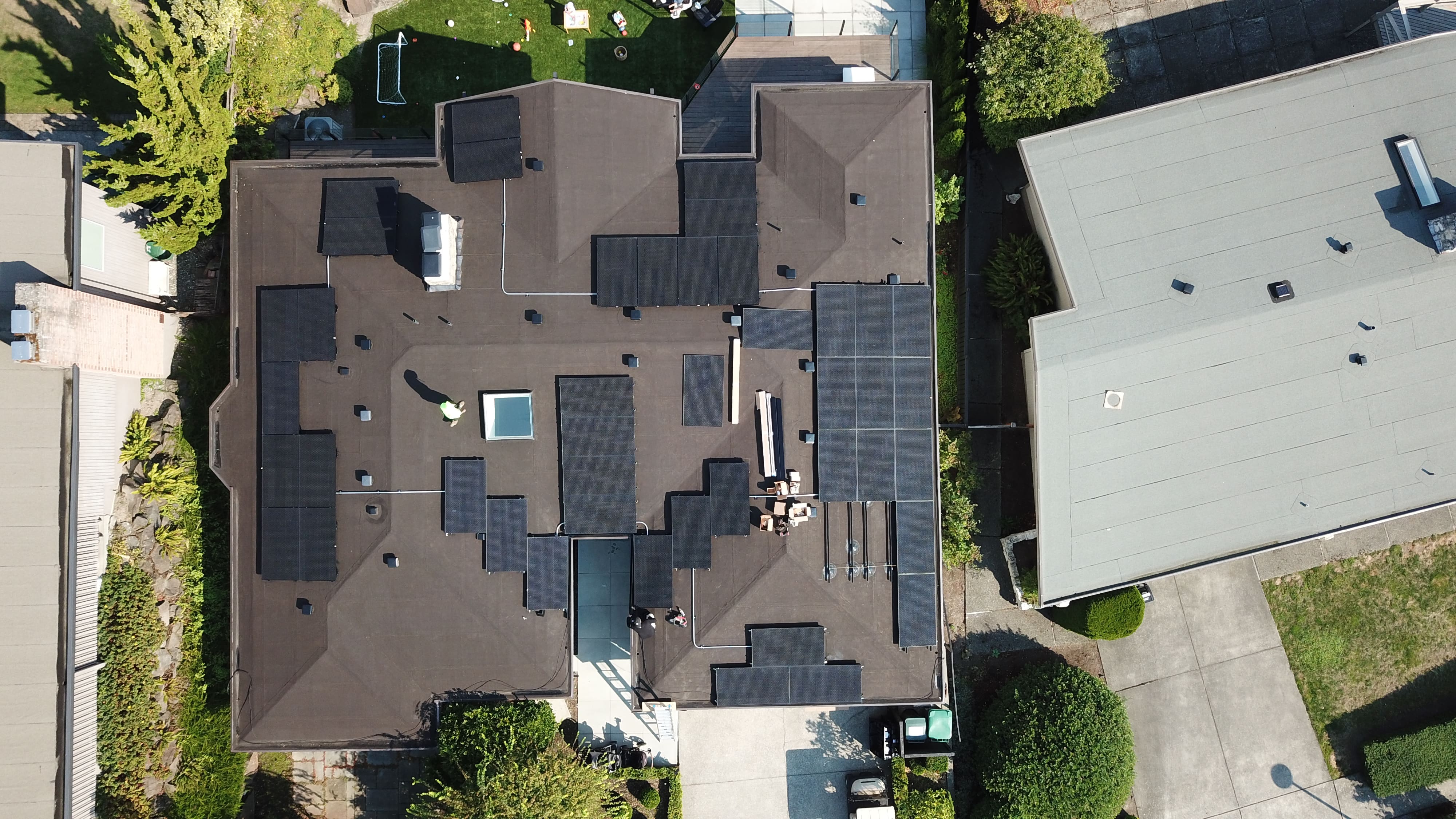
Aesthetics remain subjective, yet this myth has diminished over time as panel technology and designs evolve. Modern all-black panels present a sleek, uniform look that blends with most architectural styles, particularly on dark-shingle roofs.
Design Innovations
Manufacturers have significantly improved panel aesthetics, offering low-profile frames, hidden mounting hardware, and integrated solutions. Homeowners can select from a variety of module appearances, ensuring that panels complement the property’s color scheme. Ground-mounted arrays or outbuildings also offer alternative placements for those who prefer not to place panels on the main home.
Community Perceptions
In many Pacific Northwest neighborhoods, solar arrays are celebrated as a badge of environmental responsibility, increasing the home’s attractiveness to like-minded buyers. Local real estate agents sometimes highlight “green features” in listings, attracting a growing demographic of sustainability-focused shoppers. Far from lowering curb appeal, solar can enhance a property’s desirability in modern markets.
Myth #7: “Maintenance Is Too Much Work”
Concerns over moss, leaves, or other debris can deter potential adopters. Fortunately, well-installed and tilted arrays typically require minimal upkeep. Seasonal rains in Western Washington help wash dirt off, and many panels feature coatings that reduce grime buildup.
Annual Checkups and Monitoring
Most solar owners simply schedule an annual or bi-annual inspection. This assessment ensures all mounting hardware remains secure and any accumulated debris is cleared. Additionally, advanced monitoring systems from providers like Enphase Energy alert you if a panel’s output drops, allowing proactive servicing. Over a 25-year lifespan, the effort is surprisingly low compared to other home improvement projects.
Warranty Coverage
Panels often come with 25-year production warranties, and inverters or microinverters carry 10–25-year coverage. These warranties protect homeowners from unforeseen defects or performance issues. When you purchase from reputable manufacturers and partner with certified installers, your maintenance requirements stay minimal.
Frequently Asked Questions
1. Do solar panels produce energy on overcast days?
Yes, panels still capture diffuse light, though output is lower than on sunny days. In the Pacific Northwest, cloud cover reduces efficiency but does not halt production entirely.
2. Will I lose power during a snowstorm?
If heavy snow temporarily covers the array, output will drop. However, panels generally shed snow quickly. Even in colder regions, the annual impact remains small.
3. How do I handle tree shading on my property?
A professional installer can conduct a shade analysis to find the best panel placement. Microinverters or power optimizers mitigate localized shading, and strategic pruning often helps.
4. Are solar systems costly to maintain?
Most solar arrays require minimal maintenance. Occasional inspections and cleaning suffice. Warranties on panels and inverters also protect against manufacturer defects.
5. Does installing solar damage my roof?
Professionally installed panels use sealed penetrations and flashing to prevent leaks. In many cases, they protect portions of the roof from direct weather, potentially extending its lifespan.
Conclusion: Embrace Clean Energy in the Pacific Northwest
Despite lingering doubts, Pacific Northwest solar myths do not reflect the reality of modern photovoltaic technology and region-specific data. Cloudy skies, mild snowfall, and the presence of trees do pose considerations, but they rarely make solar installations unfeasible. With strategic design, robust incentives, and advances in panel engineering, homeowners across Seattle, Tacoma, and beyond are achieving strong returns and embracing a more sustainable lifestyle.
Still not sure if solar is right for your home? Explore our custom services and solutions tailored to the Pacific Northwest climate by visiting Solphos Services. We will help you assess your site, manage permitting, and incorporate cutting-edge technology like microinverters or battery storage to maximize efficiency. Ready to learn more or schedule a consultation? Contact Solphos today.

Pingback: Solar in Bellevue? | Is it Worth It?
Pingback: Solar Battery Storage Myths vs. Reality
Pingback: Silfab Solar Panels: PNW Performance
Comments are closed.