Rivian Charger Options: A Western WA Perspective
Choosing the right Rivian charger is vital for Seattle-area R1T and R1S owners who want a blend of convenience, potential solar integration, and lower long-term costs. While Rivian’s own home charger offers brand consistency, and ChargePoint provides robust scheduling features, we find that the Tesla Wall Connector stands out as the best overall option for Western Washington households. In this comprehensive guide, we’ll analyze all three contenders—Rivian Wall Charger, Tesla Wall Connector, and ChargePoint Home Flex—through the lens of cost, solar compatibility, and overall practicality. By the end, you’ll see why Tesla’s advanced functionalities, strong local incentives, and future-proof design make it the top pick, even for those driving a Rivian.

Why a Rivian Charger Matters in Western Washington
Western Washington leads the nation in eco-consciousness. Homeowners here frequently adopt EVs not only to reduce fuel costs but also to shrink their carbon footprints. Rivian trucks and SUVs align with that mission, combining performance with sustainable design. But local utility rates trend higher than some parts of the country, so installing an efficient home charger remains crucial. A device that integrates well with solar arrays or time-of-use pricing can offer real monthly savings, especially if you schedule charging during cheaper or greener power hours.
Moreover, Western Washington’s weather—with frequent drizzle, winter storms, and occasional blackouts—makes a robust home charger essential. Not all solutions are equal: some deliver advanced energy management and “smart” features, while others offer only basic on–off functions. Comparing them carefully ensures you invest wisely in a solution that balances brand loyalty, advanced features, and cost savings for your Rivian.
Ready to Power Up Your EV at Home?
Highlighting Three Major Choices
Although “rivian charger” typically points to the official Rivian Wall Charger, Tesla’s Wall Connector and the ChargePoint Home Flex also rank among the top options for DC or AC home charging. Each solution has unique traits in maximum power output, solar synergy, or compatibility with future hardware expansions. Understanding these distinctions helps you invest wisely in your Western Washington property.
1. Rivian Wall Charger
- Output: 11.5 kW on a 60-amp circuit
- Connector: J1772, universally compatible for EVs
- Approx. Cost: $800
- Advantages: OEM branding, plug-and-play for Rivian vehicles
- Drawbacks: No advanced load balancing, limited solar scheduling
The Rivian Wall Charger delivers up to 25 miles of range per hour for R1T or R1S owners. It’s ideal if you prioritize brand consistency and simplicity, though it lacks advanced features like load balancing or solar scheduling.
2. Tesla Wall Connector
- Output: 11.5 kW on a 60-amp circuit
- Connector: Tesla NACS (requires a $175 adapter for Rivian)
- Approx. Cost: $550 + adapter cost
- Advantages: Solar/Powerwall sync, advanced scheduling, lower base price
- Drawbacks: Designed for Tesla; adapter needed for Rivian
Despite a brand mismatch, the Tesla Wall Connector emerges as the best overall option in terms of cost, smart energy management, and future-proofing—especially when paired with an adapter for Rivian vehicles.
3. ChargePoint Home Flex
- Output: 12 kW on a 60-amp circuit
- Connector: J1772 (natively supports Rivian EVs)
- Approx. Cost: $749
- Advantages: Flexible amperage (16–50A), robust app data, some solar integration
- Drawbacks: Slightly pricier when factoring in adapter cost, no direct load balancing
Ready to Power Up Your EV at Home?
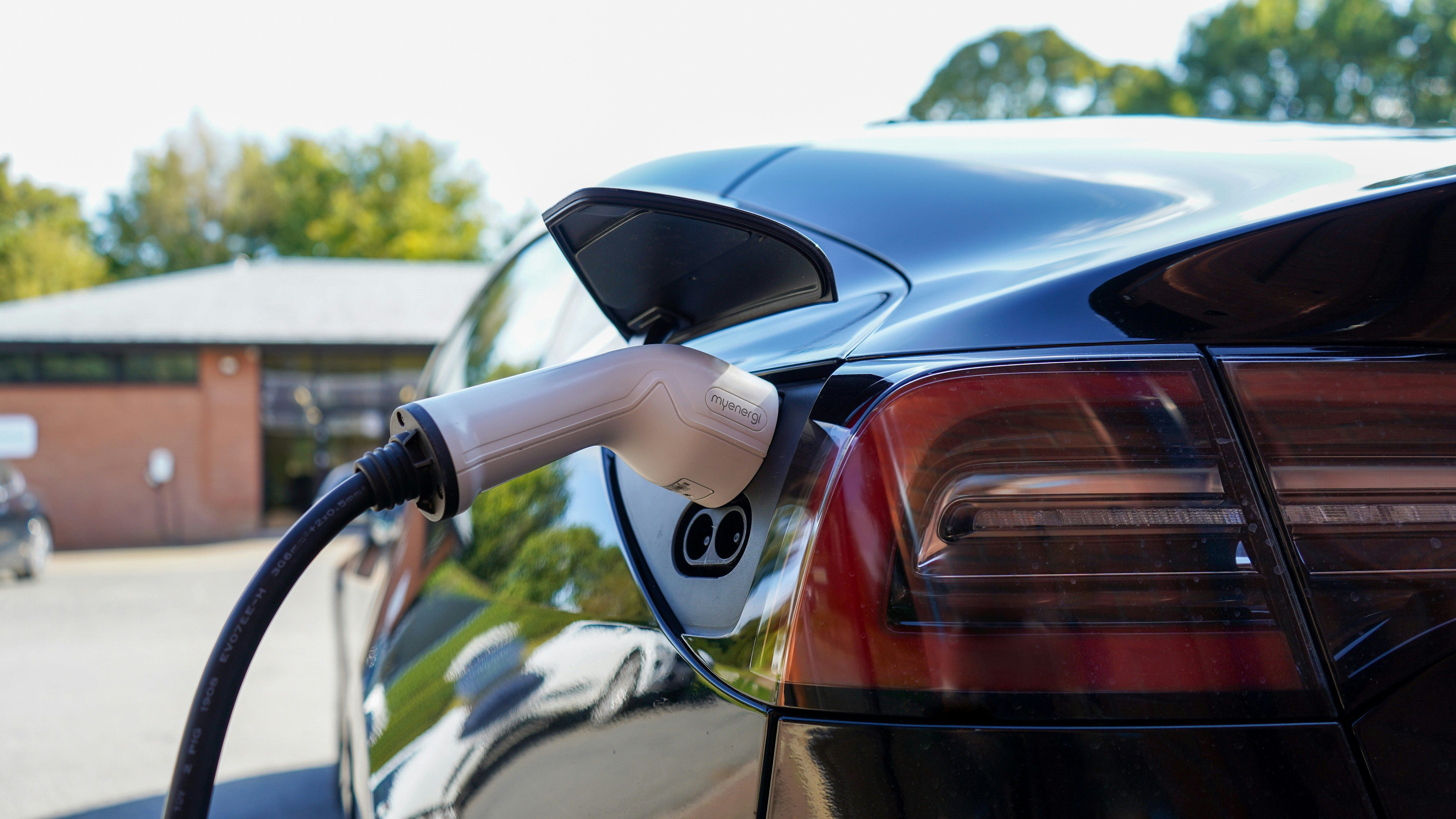
Ready to Power Up Your EV at Home?
Stop searching for public stations and power up your EV journey right from your garage
Request Quote
Why the Tesla Wall Connector Outshines the Competition
The Tesla Wall Connector stands out for its advanced power scheduling, lower base price, and strong integration with Tesla’s ecosystem. Even with the need for a $175 adapter, it typically offers better overall value compared to the official Rivian charger or ChargePoint Home Flex—especially for homeowners who might expand into solar or battery storage in the future.
Solar in Western Washington: An EV’s Best Friend
Many Rivian owners install solar arrays to offset the cost of charging—especially if driving 50+ miles daily. With net metering programs from local utilities like Puget Sound Energy and Seattle City Light, excess energy production can be credited back to your account. The Tesla Wall Connector excels in scheduling EV charging to align with peak solar generation or off-peak utility rates, offering a seamless integration that even rivals the official Rivian charger cannot match.
Cost & Incentives in Seattle for EV Chargers
Installation costs for home EV chargers typically range from $900 to $1,500, with additional expenses for electrical upgrades if needed. Local utility programs and federal tax credits—like the 30% credit in the Inflation Reduction Act—can significantly reduce overall costs. Combining your EV charger with a solar array might unlock further rebates and favorable financing options.
Installation Timeline for Your Rivian Charger
Professional installation typically takes a few hours once permits are secured. A dedicated 240V line is run from your main panel, and the appropriate breaker is installed. For the Tesla Wall Connector, adding the adapter for Rivian is straightforward, and robust weatherproofing ensures reliable outdoor performance in Western Washington.
FAQ: Rivian Charger Tips
Why consider a Tesla charger if I own a Rivian?
Tesla’s Wall Connector offers advanced scheduling, potential solar integration, and a low $550 base price—even when adding a $175 adapter, it is often more cost-effective than some alternatives.
What if I need partial backup or battery storage at home?
Tesla’s ecosystem stands out if you plan to add a Powerwall. Although optimal for Tesla EVs, the system works with Rivian when you use the appropriate adapter.
Does the Tesla Wall Connector limit me to charging only Teslas long term?
With the NACS adapter, the Tesla Wall Connector can be used by Rivian and other future EVs adopting the standard, providing flexibility as more automakers switch to NACS.
Should I worry about roof shading if I plan to add solar?
Microinverter solutions (e.g., Enphase) can mitigate partial shading, and the Tesla Wall Connector supports load scheduling to maximize direct solar usage.
Is 48A or 50A charging sufficient for daily commutes?
Yes, most drivers gain 25–30 miles of range per hour, and overnight charging typically meets Western Washington usage patterns.
Final Thoughts and Recommendations
For Seattle-area EV owners, choosing the right charger means balancing cost, functionality, and future readiness. While the official Rivian Wall Charger offers brand consistency, the Tesla Wall Connector—enhanced by a modest adapter—provides advanced scheduling, smart energy integration, and superior value. ChargePoint Home Flex remains a strong contender for those who value flexible amperage and robust data. In any case, local incentives, solar integration, and evolving industry standards make it essential to invest in a solution that not only meets today’s needs but is also adaptable for the future.
For additional guidance on EV charging or solar integration, Contact Solphos today. Our experts can help you navigate installation details, incentive programs, and long-term energy savings to make the best choice for your Western Washington home.

Pingback: EV Charger With Solar: Maximize Home Energy
Pingback: ChargePoint Home Flex Review (2025) | Solphos
Comments are closed.