Guide to Choosing the Best Home EV Charger in Washington

The electric vehicle revolution isn’t just coming; it’s actively reshaping transportation across Washington state. From Seattle’s bustling streets to the quiet communities in Sammamish and Bellevue, more drivers are embracing cleaner, quieter, and often more economical electric driving. However, transitioning to an EV involves a crucial decision: how will you charge it? While public charging networks are expanding, the ultimate convenience and cost-effectiveness lie in home charging. But navigating the options can feel complex. This guide aims to simplify that process, helping you select the best home EV charger Washington conditions and your lifestyle demand. As specialists in integrated home energy solutions, including expert EV charger installations, Solphos is here to provide the data-driven insights you need.
Why Owning a Home EV Charger in Washington Makes Sense
Investing in a home EV charger might seem like an added expense initially, but the long-term benefits, particularly for homeowners and builders in Western Washington, are substantial and align perfectly with a forward-thinking, sustainable mindset.
Firstly, consider the unparalleled convenience. Imagine waking up every morning to a fully charged vehicle, ready for your commute or weekend adventures, regardless of the weather. No more detours to public stations or waiting for an available plug. Furthermore, this convenience translates directly into time savings, a valuable commodity for busy families and professionals.
Secondly, home charging is almost always more cost-effective than public charging. Utility rates for residential electricity, especially during off-peak hours overnight, are typically lower than commercial rates charged at public stations. By scheduling charging using a smart charger, you can significantly reduce your “fueling” costs. Moreover, when paired with rooftop solar, you can essentially charge your car for free using clean, self-generated energy, maximizing the return on your solar investment.
Thirdly, installing a home charger strongly aligns with the sustainability goals many Washington residents hold. Powering your EV with grid electricity is cleaner than gasoline, but using self-generated solar power makes it a truly zero-emission transportation solution. It’s a tangible step towards reducing your household’s carbon footprint.
Finally, for both existing homeowners and residential builders, a professionally installed Level 2 EV charger is a significant value-add. It future-proofs the property, making it more attractive to potential buyers in an increasingly EV-centric market. For builders constructing spec homes, custom residences, or entire communities, including EV charging readiness or a full installation is becoming a standard expectation for discerning buyers, showcasing a commitment to modern amenities and sustainability.
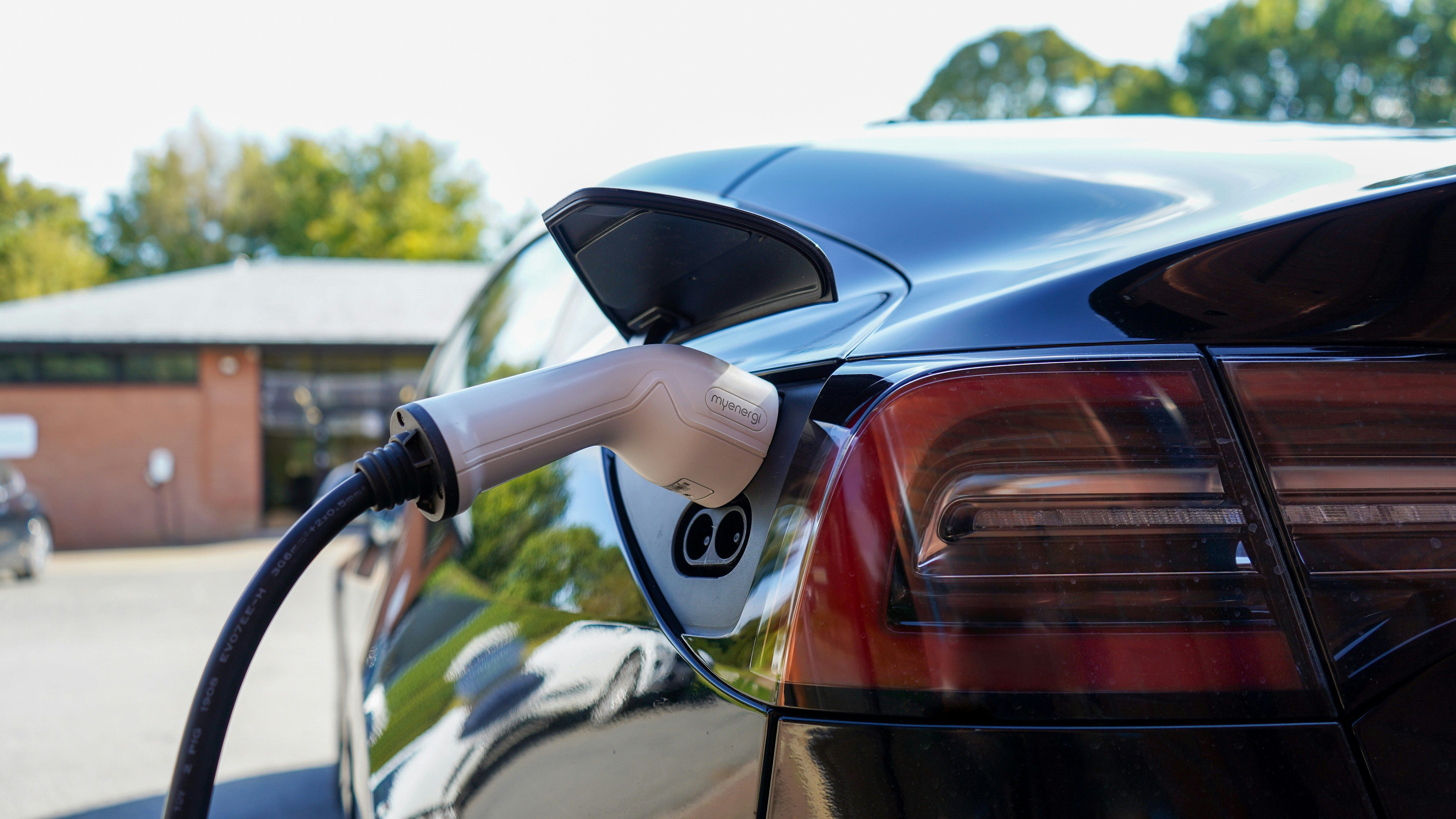
Ready to Power Up Your EV at Home?
Stop searching for public stations and power up your EV journey right from your garage.
Request Quote
Understanding EV Charger Levels:
Level 1 vs. Level 2
Before diving into specific models, it’s crucial to understand the different “levels” of EV charging commonly available for home use. This distinction primarily relates to charging speed and electrical requirements.
Level 1 Chargers: The Basics
Level 1 charging utilizes a standard 120-volt household outlet, the same kind you plug your toaster or lamp into. Most EVs come with a Level 1 charging cord. The primary advantage is simplicity; no special installation is typically required. However, the drawback is significant: speed. Level 1 charging is extremely slow, adding only about 3 to 5 miles of range per hour of charging. For a full charge on most modern EVs, this could take well over 24 hours, sometimes even multiple days. While feasible for plug-in hybrids with small batteries or drivers with very short commutes, it’s generally impractical as a primary charging solution for most battery-electric vehicle owners.
Level 2 Chargers: The Standard for Home Charging
Level 2 charging is the recommended standard for home EV charging and represents the vast majority of dedicated home charger installations. These units operate on a 240-volt circuit, similar to what powers an electric range or clothes dryer. Consequently, they require professional installation by a qualified electrician like those at Solphos. The payoff for this installation is dramatically faster charging speeds. Depending on the charger’s amperage output and the vehicle’s acceptance rate, Level 2 chargers typically add 20 to 60 miles of range per hour. This means most EVs can be fully charged overnight, easily accommodating daily driving needs. Therefore, when discussing the best home EV charger Washington homeowners should consider, the conversation revolves almost exclusively around Level 2 options.
DC Fast Charging (Brief Mention)
You’ll often hear about DC Fast Charging (DCFC) at public stations, capable of adding hundreds of miles of range in under an hour. These systems use high-voltage direct current (DC) and require extremely robust electrical infrastructure, making them prohibitively expensive and generally unsuitable for residential installation. They remain the domain of public highway corridors and commercial charging hubs.
Key Factors for Choosing Your EV Charger in Seattle and Beyond
Selecting the right Level 2 charger involves evaluating several key factors beyond just the brand name. Considering these elements carefully will ensure you find a solution optimized for your vehicle, home, and charging habits, ultimately leading to the best experience when choosing EV charger Seattle area drivers need.
Charging Speed (Amperage & Power Output)
Level 2 chargers come in various power outputs, typically measured in amperes (A) or kilowatts (kW). Common amperages include 30A, 32A, 40A, 48A, and sometimes higher. Higher amperage generally means faster charging, provided your car can accept it and your home’s electrical circuit can support it. For example, a 48A charger (delivering about 11.5 kW) will charge faster than a 32A charger (delivering about 7.7 kW). It’s crucial to match the charger to your vehicle’s maximum AC charging rate and your home’s electrical capacity. Installing a high-amperage charger on an inadequate circuit is unsafe and won’t deliver the expected speed.
Connector Type (J1772 vs. NACS/Tesla)
Historically, two main connector types dominated the North American market: the J1772 connector (used by most non-Tesla EVs) and Tesla’s proprietary NACS connector. Most third-party Level 2 chargers come with a J1772 plug, and Tesla vehicles include an adapter. Recently, many automakers have announced shifts towards adopting the NACS standard. Tesla now offers a Universal Wall Connector with both plug types built-in. When selecting a charger, ensure it has the appropriate connector for your current (and potentially future) vehicle, or that you have the necessary adapter. This is a key point for EV charger compatibility WA.
Smart Features & Connectivity
This is where modern chargers truly shine and offer significant smart EV charger benefits. Smart chargers connect to your home Wi-Fi network, enabling a range of features accessible via a smartphone app. These often include:
- Remote Monitoring: Check charging status and history from anywhere.
- Scheduling: Set specific times for charging to take advantage of lower off-peak electricity rates.
- Energy Tracking: Monitor exactly how much electricity your EV consumes.
- Load Balancing: Some systems can manage power delivery if multiple high-draw appliances (or multiple EV chargers) are running simultaneously.
- Integration: Potential to link with utility demand response programs or home energy management systems (including solar and battery storage).
While non-smart chargers exist, the added control, cost-saving potential, and data insights make smart chargers a compelling choice for most users seeking the best home EV charger Washington offers.
Ready to upgrade to faster Level 2 charging? Get a personalized assessment of your home’s electrical system.
Durability & Weatherproofing
Given Washington’s varied climate, especially the wet conditions west of the Cascades, the charger’s durability and weather resistance are important. Look for chargers with a suitable NEMA (National Electrical Manufacturers Association) enclosure rating. Common ratings for outdoor-capable chargers are NEMA 3R or NEMA 4. A NEMA 3R rating protects against falling rain and sleet, while NEMA 4 provides protection against splashing water and hose-directed water, offering greater resilience. Ensure the charger you choose is rated appropriately if it will be installed outdoors.
Installation Requirements & Costs
Installing a Level 2 charger requires a dedicated 240-volt circuit run from your electrical panel to the charger location. The cost and complexity depend heavily on your home’s existing electrical infrastructure. Key considerations include:
- Panel Capacity: Does your main electrical panel have enough capacity and physical space for a new double-pole breaker? Older homes or those with many existing high-load appliances may require a panel upgrade or a service upgrade.
- Wiring Run Distance: The farther the charger location from the panel, the higher the labor and material costs for the wiring.
- Location Choice: Garage installations are common, but outdoor installations require weatherproof considerations.
Obtaining a professional assessment from a qualified contractor like Solphos is crucial to understand the specific requirements and costs for your home. We provide comprehensive electrical assessments as part of our service.
Rebates & Incentives
Various federal, state, and local utility programs may offer rebates or tax credits for purchasing and installing EV chargers. These incentives can significantly reduce the upfront cost. Programs change frequently, so it’s essential to check current offerings. Resources like the Washington State Department of Commerce website or your local utility’s website are good starting points to research available financial assistance.
EV Charger Compatibility WA
While most Level 2 chargers work with most EVs (with the correct plug/adapter), checking specific compatibility is wise. Ensure the charger’s amperage aligns with your car’s maximum AC charge rate to get the fastest possible speeds your vehicle supports. Consulting your vehicle manual or the manufacturer’s specifications is recommended.
Ready to upgrade to faster Level 2 charging?
Get a personalized assessment of your home’s electrical system.
Level 2 Charger Comparison: Top Brands for Washington Homes
Several reputable brands offer excellent Level 2 home charging solutions. While the “best” choice depends on individual priorities (budget, features, ecosystem), here’s a brief Level 2 charger comparison of some popular options frequently considered by those searching for top EV chargers WA:
Tesla Universal Wall Connector
Tesla’s latest offering is compelling due to its integrated NACS and J1772 connector, making it seamlessly compatible with Teslas and other EVs. Known for its sleek design and integration with the Tesla app ecosystem (including power sharing features for multiple Tesla chargers), it delivers up to 48A (11.5 kW). For Tesla owners, it’s often a top contender, and its universal plug now makes it attractive for multi-EV households. This is a prime example when choosing EV charger Seattle drivers might consider for future flexibility.
ChargePoint Home Flex
ChargePoint is one of the largest public charging network operators, and their Home Flex charger brings that expertise home. It’s highly regarded for its flexibility, allowing adjustable amperage settings (from 16A up to 50A) to match circuit capacity. It boasts robust smart features via the ChargePoint app, including scheduling, reminders, energy tracking, and Alexa integration. It typically uses the J1772 connector. The comparison of Tesla vs ChargePoint vs Emporia often highlights ChargePoint’s strong app and network integration.
Emporia Smart Home EV Charger
Emporia has gained popularity by offering feature-rich smart chargers at a very competitive price point. Often delivering up to 48A, it includes Wi-Fi connectivity and integrates tightly with Emporia’s Vue energy monitoring system, allowing detailed tracking and potential optimization with solar production (if you also have their monitor). It uses the J1772 connector. For budget-conscious buyers prioritizing smart features and energy data, Emporia presents a strong value proposition.
Other Notable Options
Brands like ClipperCreek (known for durability and simplicity), JuiceBox (Enel X Way – strong smart features and utility program participation), and others also offer reliable Level 2 chargers. The market is dynamic, so researching current models and reviews is always advisable.
For homeowners truly looking to optimize their energy use, reduce costs, and maximize sustainability, integrating a home EV charger with rooftop solar and battery storage represents the pinnacle of home energy management. This synergy unlocks benefits beyond what each component can achieve alone.
The most obvious advantage is maximizing solar self-consumption. Instead of sending excess solar energy back to the grid (often for lower compensation rates), you can channel that clean, free energy directly into your EV’s battery. Smart chargers, potentially managed through smart electrical panels or integrated energy systems, can automatically detect surplus solar production and initiate charging, effectively turning sunlight into driving miles.
Furthermore, sophisticated scheduling becomes possible. Systems can prioritize charging during peak solar production hours or use stored battery energy to charge the EV overnight if grid rates are high, always optimizing for the lowest cost or cleanest source. This level of control requires seamless communication between the charger, solar inverter, battery, and potentially a smart home energy management system.
At Solphos, creating these integrated systems is our specialty. We don’t just install components; we design holistic solutions where your solar panels, battery backup, smart electrical panel, and EV charger work in concert. This approach ensures you harness the full potential of your investments, achieving greater energy independence and resilience. Selecting the best home EV charger Washington offers often involves considering how well it integrates into this broader energy ecosystem.
Installation: Partnering with Solphos for a Seamless Experience
Proper installation is non-negotiable for safety, performance, and code compliance. Attempting a DIY installation of a 240V circuit is hazardous and not recommended. Partnering with a licensed, experienced electrical contractor like Solphos ensures your charger is installed correctly and safely.
Our process begins with a thorough assessment of your home’s electrical system and your charging needs. We evaluate your panel’s capacity, discuss optimal charger locations (considering convenience and wiring routes), and identify any necessary upgrades. We provide clear, upfront quotes detailing all aspects of the installation.
Our certified electricians handle the installation professionally, adhering to all National Electrical Code (NEC) standards and local Washington regulations. We ensure the dedicated circuit is properly sized, the wiring is run safely, and the charger is mounted securely and commissioned correctly. We handle necessary permits and inspections.
Crucially, if you’re integrating the charger with solar or battery systems, Solphos manages the entire setup, configuring smart features and ensuring all components communicate effectively. We serve homeowners and residential builders across Western Washington, from Seattle to Bellevue, Sammamish, and beyond, bringing expertise in both standard installations and complex energy system integrations. Finding the top EV chargers WA is only part of the equation; expert installation is key.
Conclusion: Powering Your Drive Towards a Sustainable Future
Choosing the right home EV charger is a significant step in your electric vehicle journey. By understanding charger levels, considering key factors like speed, connectivity, and compatibility, and comparing reputable brands, you can make an informed decision. Remember that the best home EV charger Washington drivers can choose is one that fits their specific vehicle, budget, lifestyle, and home’s electrical capabilities.
Furthermore, looking beyond the charger itself to its potential integration with solar and battery storage unlocks even greater value, aligning convenience with cost savings and sustainability. The future of transportation is electric, and empowering that future starts with smart, reliable home charging infrastructure. Solphos is committed to helping Washington homeowners and builders implement these forward-thinking solutions effectively and efficiently.
